

Programe

Richard Roebel - Timing Fragen
Jakub Rataj: for harpsichord
Lydia Weißgerber: warten bei wein und speisen für Cembalo solo
Michael Quell: Διακύμανση κενού - vacuum fluctuation für Cembalo
Ernst Helmuth Flammer: Diskontinuum - sich verwandelnd - zerfasernd
Tobias Schick: Between opposites 1. Arpeggio-Maschine2. Rush Hour: Presto
Filip Goldanowski: OPUS 39: Che oscura il cielo... II
Adriana Hölszky: Decorum
The German harpsichordist, pianist, and composer Richard Röbel presents the interpretive possibilities of historical keyboard instruments in the context of contemporary music. He completed his studies in composition, music theory, and piano at the Carl Maria von Weber College of Music in Dresden, followed by studies of historical keyboard instruments at the State University of Music in Trossingen. He is the recipient of numerous awards, such as from the all-German Jugend musiziert and Jugend komponiert competitions, prizes for young composers and musicologists, and a scholarship from the Saxon Mozart Society. As a performer, he has collaborated with notable composers such as Helmut Lachenmann and Wolfgang Rihm, and in the field of composition, he studied privately with Ernst Helmuth Flammer. His original works have been performed by ensembles such as ensemble recherche and the Dresden Philharmonic. He is currently collaborating with the NEOS music foundation on the CD collection Timing Fragen, for which fifteen new works for solo harpsichord were created. He has taught in Trossingen and has been teaching at the Robert Schumann Conservatory since 2020.
The recital is titled Timing Fragen, its program touches upon the boundaries of interpretive possibilities and the instrument itself, and it includes compositions by Lydia Weißgerber, Michael Quell, Ernst Helmuth Flammer, Jakub Rataj, Tobias Schick, Filip Goldanowski, and Adriana Hölszky.
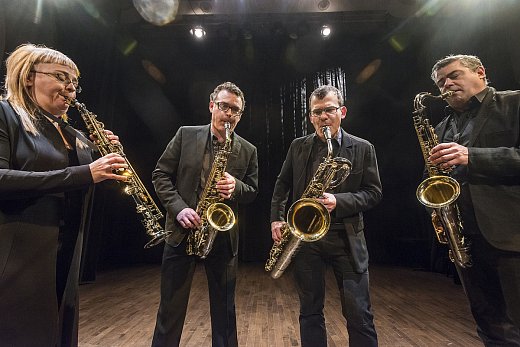
Quasar
Eduardo Caballero (MX): indeterminacion del continuo
Florence Tremblay Vapeurs (CA): taillées dans l’air lascif
Émilie Girard-Charest (CA): Bestiaire
Michal Wróblewski (CZ): Rythms no.6 Glissando for saxophone quartet – a world premiere commissioned by Contempuls
Amy Brandon (CA): Pterysk
The Canadian saxophone quartet Quasar, based in Montreal, operates under the artistic and organizational leadership of Marie-Chantal Leclair. The ensemble has long focused on the performance and development of repertoire for this instrumentation, with an emphasis on presenting works by contemporary North American and international composers. On a global scale, the ensemble is acclaimed for its technical sovereignty and conceptual approach, which relies on close collaboration with composers. Alongside its concert activities, it is also dedicated to organizing masterclasses and workshops for composers and performers. The quartet's activities and international tours are supported long-term by the Conseil des arts et des lettres du Québec (CALQ).
In the second part of the opening evening, the ensemble will present a program consisting of compositions authored by Émilie Girard-Charest, Florence Tremblay, Eduardo Caballero, and Amy Brandon. The conclusion of the concert will belong to the world premiere of a saxophone quartet by Czech composer and improviser Michal Wróblewski, which was commissioned by the festival.
 Karel Šuster - Orchestr BERG.jpg)
David Danel & friends
Ramin Akhavijou: probable – music for any instrument, probably a violin; selection
Luigi Nono: Hay que caminar. Sonando
Ivan Fedele: „...qui transitis per viam…“ for sq after Gesualdo da Venosa
Czech violinist David Danel is a prominent performer on the domestic contemporary music scene. He is the founder and artistic director of the string quartet fama Q, with which he systematically dedicates himself to the presentation of modern and postmodern literature and to connecting the domestic scene with international trends. As a soloist, he has performed with orchestras such as the Janáček Philharmonic Ostrava, Capella Istropolitana, the Slovak Chamber Orchestra, and the Talich Chamber Orchestra, and has performed at the summer festival in Dartington, UK, among others. A significant part of his activities consists of recording work for Czech Radio, focusing on chamber repertoire and premiere recordings of compositions by living composers. For his festival block during the second evening, which deliberately accentuates the local interpretive background, he invited Hungarian violinist and composer Péter Tornyai to collaborate, and he will play the final piece as a member of the Fama Q string quartet, of which he is the artistic director.
The chamber-oriented evening will open with a selection from the probable series by Iranian-American composer Ramin Akhavijou. Subsequently, the musicians will perform the extensive work „Hay que caminar“ soñando by Luigi Nono, a classic of the Italian post-war avant-garde, and the performance will conclude with the string quartet ...qui transitis per viam… by Ivan Fedele, which reflects the musical legacy of the Renaissance master Gesualdo da Venosa.
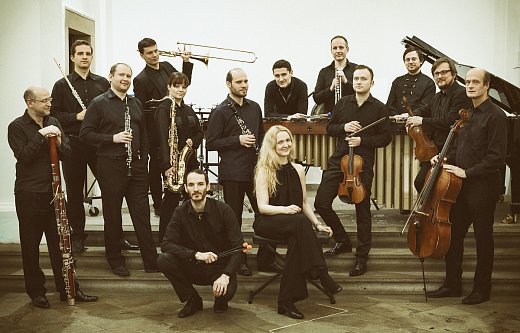
Prague Modern
Hannah Kendall: Weroon, weroon
Hannah Kendall: yes, flash bright lightning in my southern sky!
Hannah Kendall: Tuxedo: hot summer, no water
Šimon Voseček: Astigmatismus
Elia Koussa: Arcades
Anahita Abbasi: within the Hadal and Epi
Ravi Kittappa: „...zůstane mezi námi…“ - a world premiere commissioned by Contempuls
Ramin Akhavijou: Unnoticed Dance no. 1
The chamber ensemble Prague Modern was founded in 2008 on the initiative of French conductor Michel Swierczewski at the then Prague Philharmonia and has been operating as an independent association under the artistic direction of David Danel since 2009. The ensemble, which is often described by music critics as "the best Czech ensemble for new music," consists of top domestic instrumentalists. The group focuses on solo recitals, chamber projects, and compositions for smaller orchestras. They have performed on prestigious domestic and foreign stages (e.g., Pierre Boulez Saal in Berlin, Musica Strasbourg, Prague Spring, Café Budapest, Cluj Modern). A significant milestone was the recording of works by Dai Fujikura under the direction of conductor Pascal Gallois for the Stradivarius label (2014), which won the "Coup de coeur" award from the French Charles Cros Academy. The repertoire of Prague Modern includes key works of the world avant-garde as well as the output of contemporary Czech composers (e.g., M. Adámek, J. Rataj, M. Srnka), which the ensemble actively exports abroad, often as part of multimedia projects or seminars on contemporary interpretive practice.
The ensemble will present a wide spectrum of contemporary compositional approaches. The program features a triptych of compositions by British composer Hannah Kendall, followed by the music of Iranian composer Anahita Abbasi, Lebanese composer Elia Koussa, and Czech composer Šimon Voseček. During the evening, there will also be a return to the work of Ramin Akhavijou. The concert will culminate in the world premiere of Ravi Kittappa's composition ...zůstane mezi námi… for percussion, piano, and strings, commissioned by the festival.
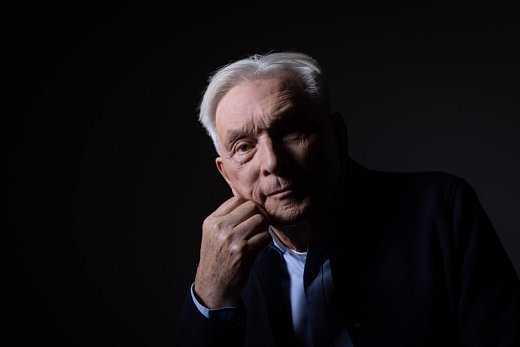
Zygmunt Krauze
K. Stockhausen, O. Messiaen, A. Webern, L. Andriessen, E.Satie, B. Schaeffer, Z. Krauze, J. Bach, L. Beethoven, J.Haydn, F. Chopin.
Most of the pieces performed in fragments, with improvisations.
Zygmunt Krauze & NeoQuartet: Zygmunt Krauze: Piano quintet
The prominent Polish composer and pianist Zygmunt Krauze is among the distinctive compositional figures of the second half of the 20th and the beginning of the 21st century, not only in the Polish but also in the international context. He divides his work into several categories: from compositions based on the principle of "unism" inspired by the paintings of Władysław Strzemiński, through spatial installations, to concepts of "music about music." He is the author of ten operas and more than a hundred orchestral and chamber compositions in which the piano holds a crucial place. In 1966, he won first prize in the Gaudeamus international competition for interpreters of contemporary music, and as a concert pianist, he continues to perform on leading world stages today. For a quarter of a century, he led the ensemble Warsztat Muzyczny, for which renowned world composers (e.g., Feldman, Nyman, Andriessen) wrote. At the invitation of Pierre Boulez, he worked at the IRCAM institute in Paris as an artistic advisor and in the late 1980s was the president of the International Society for Contemporary Music (ISCM). He has taught at universities in the USA (Yale, Columbia) and in Tokyo, and is currently active as a professor of composition. He is a recipient of the French National Order of the Legion of Honour and the Polish Gold Medal for Merit to Culture – Gloria Artis.
The artist will present himself in a solo recital format, conceived as a single continuous flow of piano improvisation. In it, he will organically connect his own original works with fragments of compositions from various epochs of music history—from J. S. Bach, J. Haydn, L. van Beethoven through F. Chopin and E. Satie to A. Webern, O. Messiaen, K. Stockhausen, B. Schaeffer, and Louis Andriessen. At the end of the recital, he will be joined by the Polish NeoQuartet for a joint performance of Krauze's Quintet for Piano and Strings.
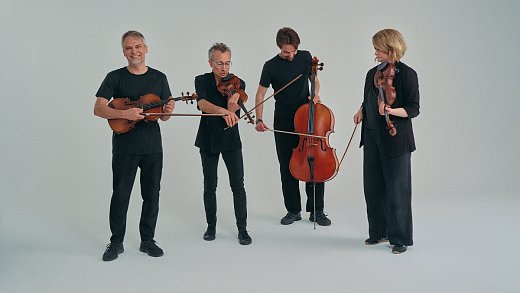
NeoQuartet
Luboš Mrkvička: Smyčcový kvartet č. 1 – a world premiere commissioned by Contempuls
Ernst Helmuth Flammer: String quartet No. 3
Tomasz Prasqual: String quartet No. 3
Johannes Kalitzke: Europe – Challenges Still Relevant
The Polish string quartet NeoQuartet, consisting of Karolina Piątkowska-Nowicka (1st violin), Paweł Kapica (2nd violin), Michał Markiewicz (viola), and Antoni Majewski (cello), specializes in the performance of contemporary music. The quartet is among the most active European ensembles in the field of new music and regularly performs at prestigious festivals in Europe, China, South Korea, Japan, and the USA. They often combine a classical sound with visual arts, modern dance, and electronics. They have recorded ten albums for Polish, German, Greek, and American labels, hold the 2018 Pomeranian Artistic Award, and have received several nominations for the Fryderyk Award. Since 2012, they have organized the NeoArte – Synthesizer of Arts festival in Gdańsk, which focuses on popularizing contemporary composition, organizing masterclasses, and commissioning new works from Polish and international composers. Starting in 2026, NeoQuartet will become the new ensemble-in-residence of the Contempuls festival for a three-year period, for which they will annually perform a new composition commissioned from a Czech composer by the festival.
In the standalone part of the closing evening, the ensemble will perform works by Johannes Kalitzke, Ernst Helmuth Flammer, and Tomasz Prasqual. The centerpiece of the concert and the finale of the entire year's edition will subsequently be the world premiere of the new String Quartet No. 1 by Luboš Mrkvička. This composition was commissioned by the festival as the first Czech work within the aforementioned multi-year residency project.